
MANAGING QUALITY,
FROM CRAFTSMANSHIP TO INDUSTRIAL SCALE
At Fine Packaging Manufacturers, quality is not a fixed standard. It is a shared language language that takes different forms depending on projects, production volumes, and levels of requirement.
From handcrafted pieces to large-scale industrial productions, our role remains the same: creating an exceptional product. Ensuring the highest level of quality means addressing these multiple realities by defining the appropriate level of control and implementing it in the most relevant way.
TWO REALITIES, ONE SHARED STANDARD
When craftsmanship sets the pace
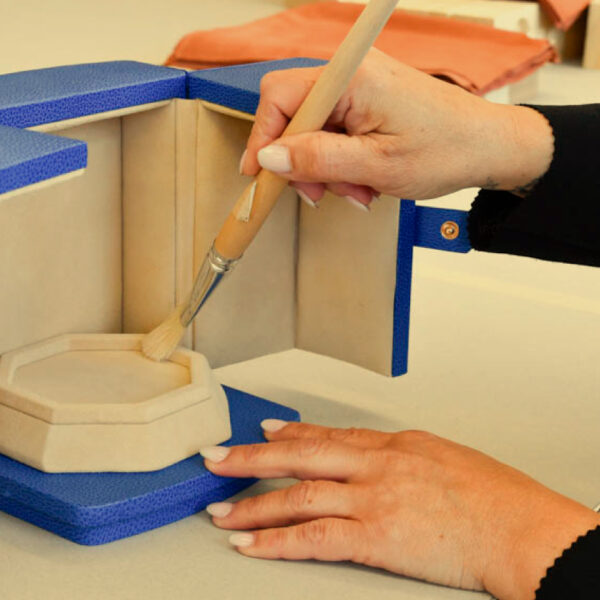
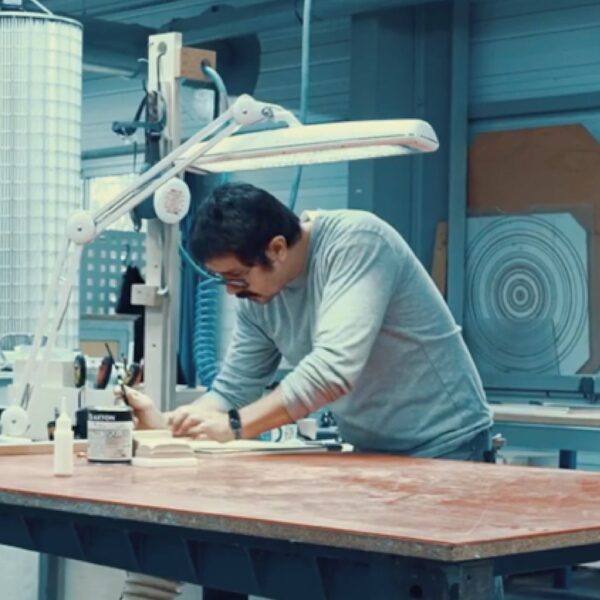
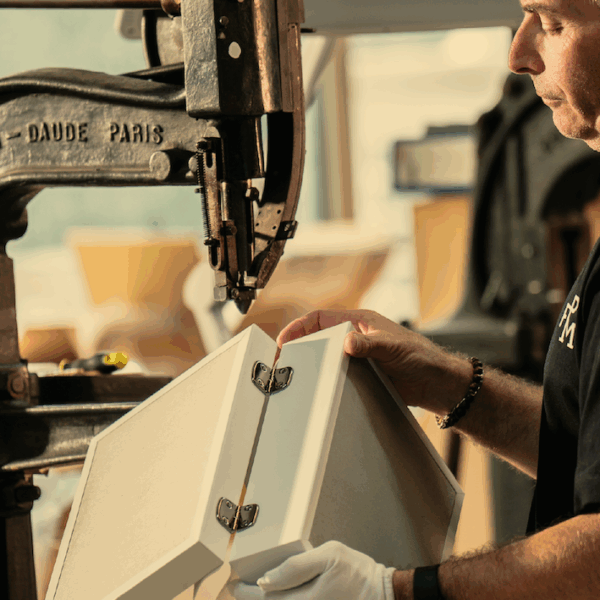
For small and micro production runs, quality is built step by step, as close as possible to the product, and as close as possible to the gestures. In environments such as Norline in France or Nevacril in Portugal, it relies on a simple principle: everyone is responsible for the quality of what they produce.
Each operator carries out continuous checks on their own production. Every defect is identified and isolated immediately. A quality controller intervenes randomly throughout the process, and product validation takes place at 3 levels with the manufacturing supervisor, the production manager, and the project manager.
Here, quality is not driven by rigid standardization, but by the eye, the touch, the gesture, and experience.
Clients themselves are often integrated into the process, through on-site inspections before shipment, either across all pieces or through sampling depending on volumes or their requirements.
In this context, quality is above all a matter of proximity and attention to detail.
When industrial production guarantees consistency
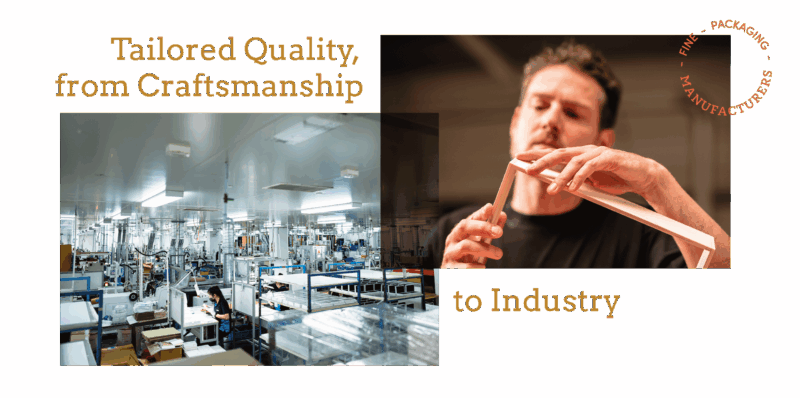
For large-volume productions or longer-term productions, or projects involving replenishment orders, quality is organized around a structured framework, designed from the development phase onward.
Each project begins with a reference sample sample approved by the client, serving as the anchor point for the entire production. Tolerances are defined upstream, critical stages are identified, and controls are distributed throughout the process: upon receipt of raw materials, during production at key control points, and during final inspection before shipment.
Specific tools help objectify results: templates, defect panels, colorimetric measurements.
Here, quality is measured, traceable, and repeatable over time.
FROM LOCAL EXPERTISE TO GLOBAL CONSISTENCY
The strength of FPM does not lie solely in the diversity of its sites, but in its ability to make them work together consistently.
A project may be developed at one site, produced at another, or involve several areas of expertise simultaneously. To ensure alignment, a shared technical framework is defined (specifications, tolerances, critical points of attention), reference samples are shared between sites, and regular coordination meetings are organized between teams and with the client.
This organization ensures the same level of requirement, regardless of the production site.
Ensuring quality within an evolving collective
The FPM collective is evolving and welcoming new manufacturers. Maintaining quality in this context requires a solid organization, based on the alignment of viewpoints on client expectations, the sharing of methods, processes and standards, and the progressive, structured integration of new sites.
Quality is not static. It is managed, shared, and continuously adjusted.

WHAT GUARANTEES FPM'S RELIABILITY
Complete traceability
Every product is documented at every stage. In particular, upon receipt of raw materials, the product is identified and inspected. FSC® and PEFC® materials are specifically isolated.
During the manufacturing process, the order number is linked to production, inspections and results are recorded, technical drawings and product photo libraries are archived for future reproduction, and cartons and pallets are precisely labeled.
From reference samples to shipped batches, everything is recorded and accessible.
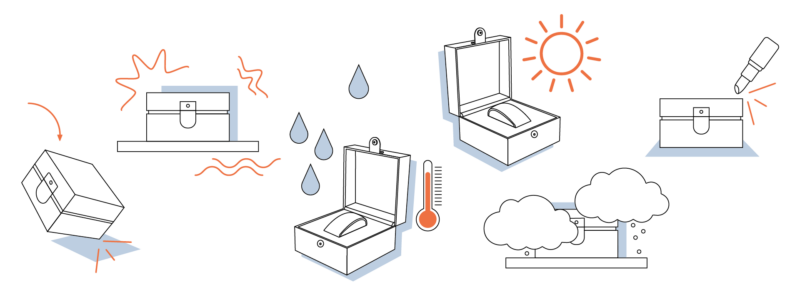
Testing under real use conditions
Depending on project requirements, are implemented:
- drop tests (packaging resistance)
- vibration tables (transport simulation)
- climate tests (heat, cold, humidity)
- UV tests (light resistance)
- corrosion tests (salt spray testing for metal components)
- chemical tests (resistance to cosmetic products such as makeup)
Quality does not stop at production. Our objective is to guarantee a level of quality that goes beyond aesthetics and takes into account real transportation and product-use conditions.
Continuous improvement
Quality is not limited to inspection; it also relies on the ability to react and improve.
In the event of non-conformity, causes are analyzed collectively, corrective actions are defined quickly, and their effectiveness is monitored over time.
During production:
- immediate quarantine of non-conforming items
- alert if a defect is repeated (e.g. >3 occurrences over a short period)
- analysis with the production and quality teams
On the client side:
- response within 48 hours maximum, even if partial
- sharing of initial analyses
- defined and communicated corrective action plan
Then:
- additional testing if required
- monitoring of results over time
- verification of the effectiveness of the actions implemented
Beyond processes, quality relies on a constant presence on the production floor. Dedicated teams carry out inspections, regular checks are conducted on production lines, and internal audits verify the proper application of standards.
Above all, every operator is trained and involved. Quality is not centralized; it is distributed across every level of the organization, as close as possible to the product.
Transparency and responsiveness are essential; every incident becomes a lever for improvement.
TAILORED QUALITY
At FPM, quality is not limited to either craftsmanship or industry. Depending on the project, it means knowing when to prioritize the eye and the gesture, or, on the contrary, when to structure and measure.
In every case, the objective remains the same: applying the right level of control to securethe product, meet constraints and respond precisely to our clients' expectations.
FPM teams