DESIGNING TOMORROW – DESIGNING THE EXCEPTIONAL
A conversation with Alexandre Fougea, designer
How does a singular object come to life? How can we move beyond established codes and tried-and-tested solutions? And above all, how can an idea become a reproducible object without losing what makes it exceptional?
For this first edition of DESIGNING TOMORROW, FPM opens the conversation with Alexandre Fougea, designer and engineer by training.
An opportunity to shift perspectives, bring design and manufacturing together, and explore how to design the exceptional and make it achievable.
ALEXANDRE FOUGEA
Alexandre Fougea is a passionate engineer-designer and a graduate of Arts & Métiers. For more than twenty years, he has explored the relationship between design and engineering, notably through his studio and his brand Akonite. He has had the opportunity to collaborate with renowned brands and designers, while teaching since 2009 in the Object Design department at the École des Arts Décoratifs de Paris. His goal is to create objects and spaces that combine functionality, aesthetics and respect for the environment. He works closely with a strong network of French manufacturing partners.
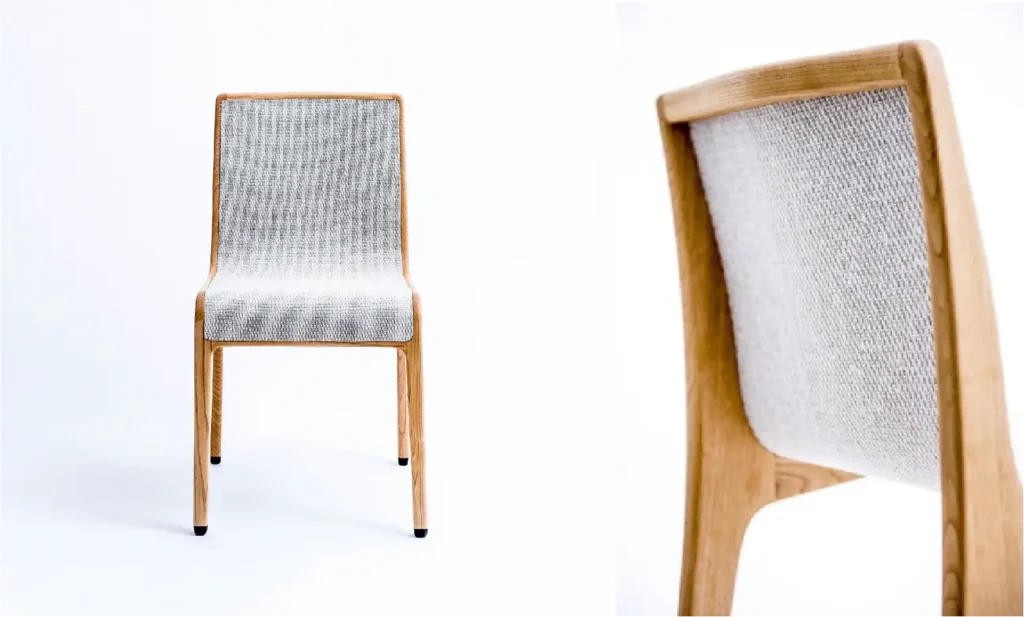
EXCEPTIONAL THROUGH JUSTNESS
For Alexandre Fougea, the exceptional does not necessarily come from accumulation or spectacle. Quite the opposite. “An exceptional object first and foremost meets a need. It should be made to last, be repaired and passed on. To me, that is the fundamental promise of luxury.” The quality of materials and the uniqueness of craftsmanship both play a key role, provided they are relevant and consistent with the project, with materials used in the right place, for the right reason.
“I don’t believe in gratuitous gestures or excess. An object becomes exceptional when everything is right: the material, the gesture, the way it is made. An expensive material can make perfect sense if there is a reason for using it, if it will endure and last. There should be a sense of heritage and transmission. It is a vision that echoes the evolving codes of luxury: simpler, more functional objects, designed to withstand use, with value increasingly shifting toward experience.”
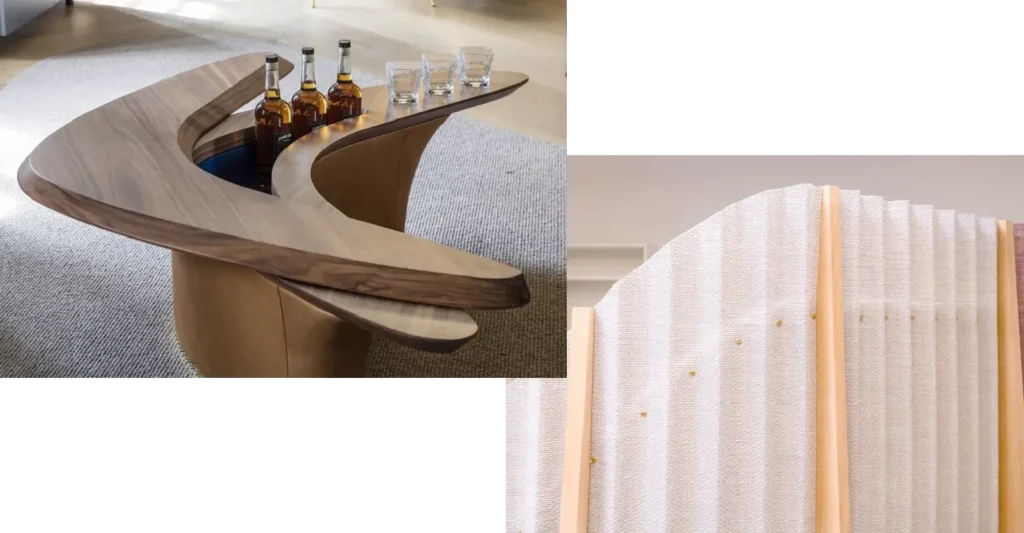
A DIFFERENT APPROACH TO FORM
But how can we create singularity without reproducing what already exists? Alexandre Fougea’s answer is quite radical: don’t start by drawing. “I never approach a project through form. I start with use, function and constraints: the object may need to be set down, handled, hung… These functional surfaces create lines of force. And that is how unexpected forms can emerge.”
Another principle follows: look beyond your own field. Sports, healthcare, architecture, craftsmanship, industry, ethnography… Alexandre Fougea deliberately takes a cross-disciplinary approach to design. “To remain creatively fertile, you can’t stay confined to your own field. A membrane discovered in the medical sector might one day inspire a luxury object. You have to meet specialists from other disciplines, look at how things are done elsewhere, sometimes without even knowing exactly what you are looking for yet.” In other words, drawing inspiration from other worlds opens up new possibilities.
TEST BEFORE EVERYTHING IS DEFINED
Experimentation enters Alexandre Fougea’s design process at a very early stage. Samples, cardboard, full-scale mock-ups, material and assembly tests: reality enters the process before the design is even finalized. “A two-millimeter sheet of metal - its tension, the way it behaves - you can’t fully understand that through a drawing or a 3D model. You have to handle it. Very early on, I make mock-ups and full-scale models. You run your hand over them, touch them, test how they feel and how they are held.”
Above all, the designer does not work alone. “It’s a constant back-and-forth. I like to involve manufacturers very early in the process. They bring another perspective to the project, and their input helps us make it more precise and more efficient. Even though we remain responsible for the design, the project evolves with them.” A thickness changes. An assembly is simplified. A material disappears. Material layouts are optimized to reduce waste. Proportions evolve. Manufacturing constraints no longer limit creativity: they become part of the design process.
FROM THE EXCEPTIONAL TO SERIES PRODUCTION
This is where forward-looking thinking meets industrial reality. For Alexandre Fougea, a designer is not an artist creating a one-of-a-kind piece. Design serves a purpose and an organization: the object must be reproducible.
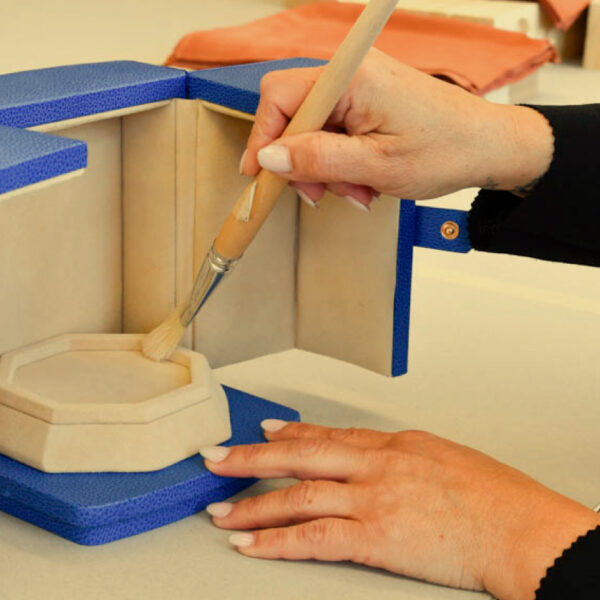
“Series production makes it possible to achieve realistic production costs and genuine reproducibility. We use machines where they make sense. But with an exceptional object, there is often still a stage that requires a highly skilled person. Somewhere in the manufacturing process, there is still an expert hand.”
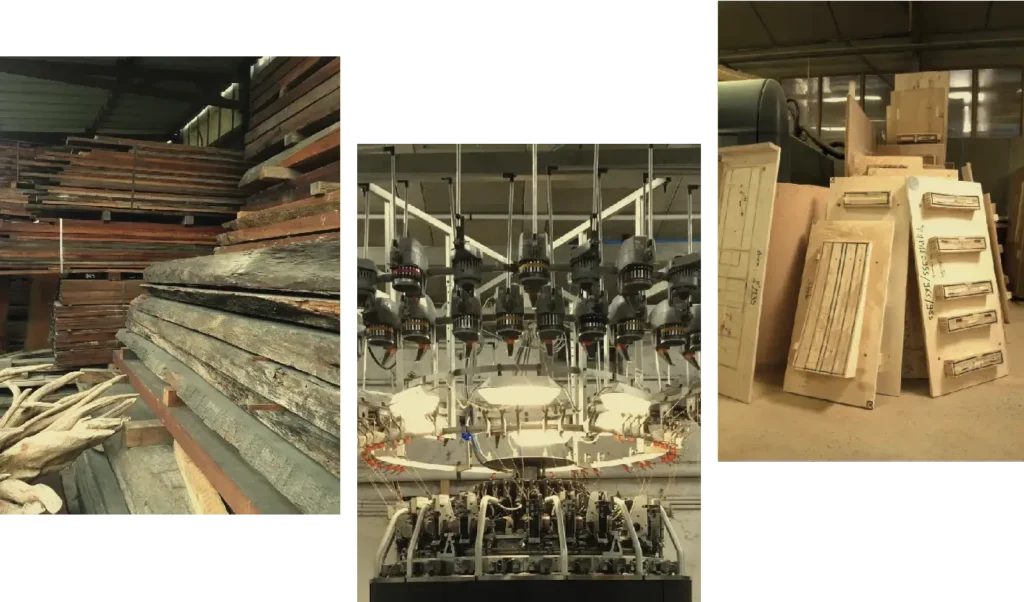
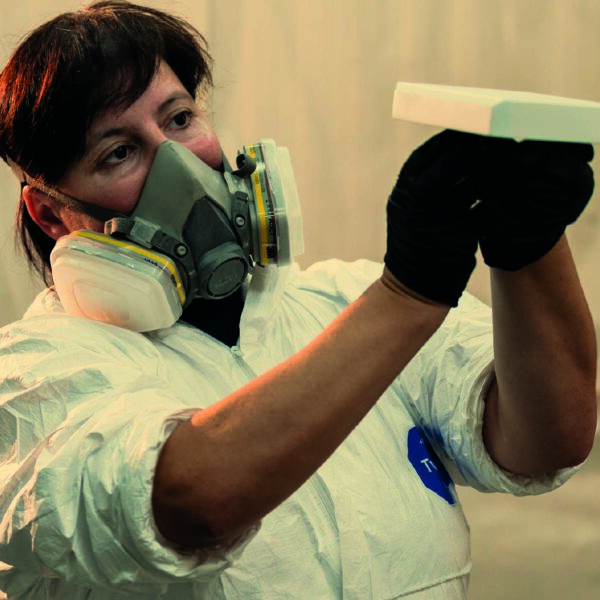
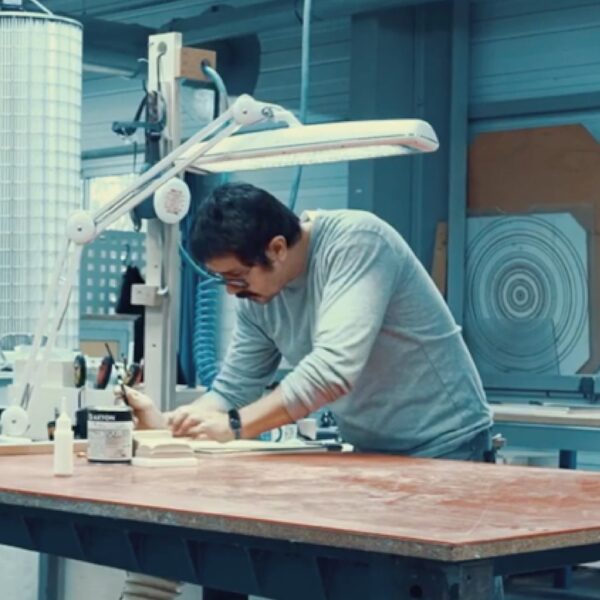
It is precisely this combination of technology, reproducibility and craftsmanship that he discovered during his visit to FPM’s workshops. “At FPM, I felt that strong craftsmanship, but also the ability to work in series, with machinery and high-tech equipment. There is a real desire to embrace new technologies while preserving the human touch. That is what inspired me.”
FPM: VENTURING BEYOND THE EXPECTED
This year, Alexandre Fougea and his team approached FPM to explore the design dimension of the FPM brand and give it tangible form. Rather than creating a new packaging concept, Alexandre proposed broadening the scope of experimentation to imagine objects capable of expressing FPM’s expertise, values and commitments.
“The idea was to broaden the framework and not focus directly on the product itself. Instead, we wanted to imagine something useful and symbolic that could convey craftsmanship, aesthetics and functionality, as well as the Group’s environmental commitments. It is a kind of creative laboratory: a way to test, learn, spark new encounters and uncover solutions that can ultimately become reality. You have to open the doors very wide, then narrow things down. Remove, simplify, make the project more precise and more effective. At the École des Arts Décoratifs, I often used to tell my students: your job is to take things away.”
The result? A forward-looking collection of presentation boxes imagined for watchmaking, jewelry, fragrance, Champagne and spirits, exploring new expressions of materials and nature through FPM’s expertise. Alongside them, insect hotels, symbols of the Group’s commitment to biodiversity, designed to welcome visitors at the entrances to its sites.
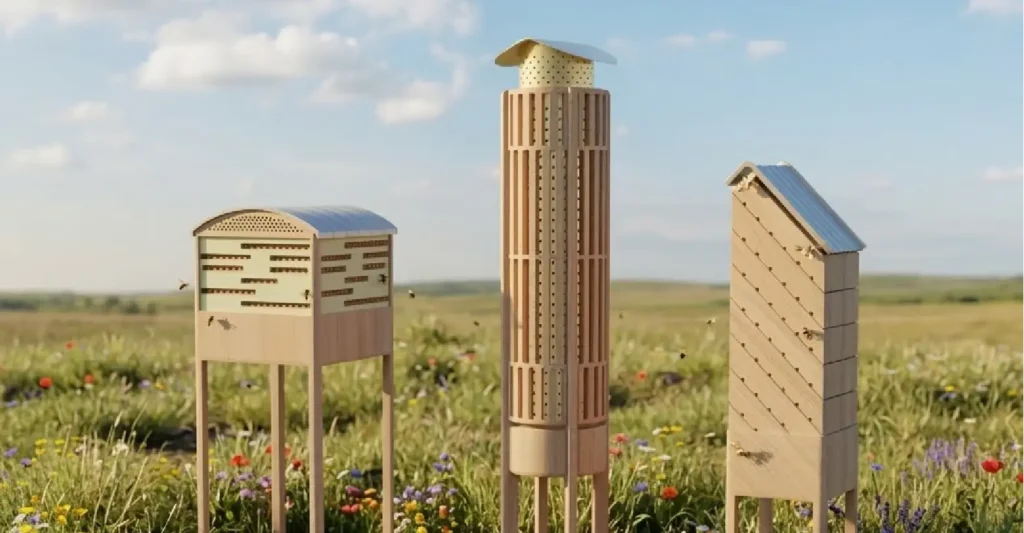
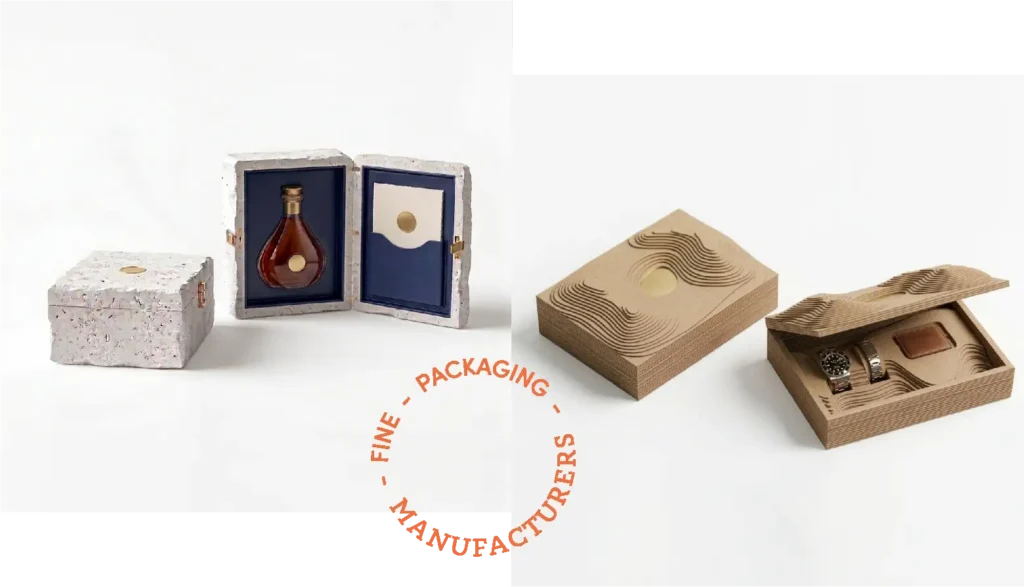
Thank you to Alexandre Fougea for sharing his vision and for imagining this collection of nature-inspired objects and packaging together with FPM. An invitation to break away from established habits, experiment differently and bring ideas face-to-face with reality from the very beginning. Because designing the exceptional also means creating the conditions to make it possible.
FPM teams